

Believing the Unbelievable
The NBA Finals and the Land of Milk and Honey

Until this year’s NBA Finals, I had never followed basketball. In fact, when my husband told me that the Knicks had made the playoffs, my response was, “What sport are we talking about?” But paying at least some attention was de rigueur for New Yorkers this year, so I did. I was truly inspired by what happened in Game 4. You probably know all about it: The Knicks were down by 29 points. No team in NBA finals history had ever come back from such a deficit. It would have been forgivable to say it can’t be done. Based on the past, the game was over. But the Knicks looked into the future and saw a different possibility. They believed the unbelievable.
Belief is such a funny thing. Hope, love, invisible realities, and future blessings – the world is full of wonders that we have a hard time believing. Because even good things can be intolerably disruptive. It can feel way riskier, more vulnerable to let ourselves believe something good. What if we let our guard down and we get hurt? What if we work hard for something and it doesn’t pan out? What if we allow ourselves to hope and then our hopes get dashed? That can be much more painful than never hoping to begin with.
Trauma Binoculars
We see an amazing illustration of this in the Torah story of the twelve scouts. Moses sends twelve leaders to go scout the land – to see what kind of land it is, and report back. Find out if it’s a good or bad place, what the people and cities are like, what grows there. In other words, what is this future that they are promised? Moses wants the trailer for the movie.
The scouts return after 40 days, and here the real story begins. Ten of them show the “Scary-Place-Bad-Place” trailer. They say, “There are giants there – the Nephilim, the fallen ones.” They say, “Amalek lives there.” They say, “It’s a land that devours its inhabitants.” Those ten scouts look through a window into the future and they feel inadequate to it.
Coming out of Egypt, can you really blame them? Generations of slavery, back-breaking labor and humiliation, a terrifying escape, then being attacked by Amalek – the archetype of cynicism and doubt. With this history, they’ve come to see others as giants and themselves as prey. And the land mirrors this back to them. It’s a projection of all their worst fears.
The ten scouts’ report sends fear rippling through the community. Through the trauma binoculars of those ten scouts, the people see a hostile world. They demand to go back to Egypt.
A Different Spirit
Then there are the other two scouts – Caleb and Joshua. Caleb and Joshua are blessed with different binoculars and “imbued with a different spirit” – a ruach acheret. Why? According to the midrash, during their journey Caleb takes a side trip to Hebron and prostrates himself on the graves of the patriarchs and matriarchs. He says to them: “Pray for me, that I be saved from the counsel of the scouts.” In other words, “Inoculate me from the fears of the others. Free me from the pain of the past so that I can see clearly.”
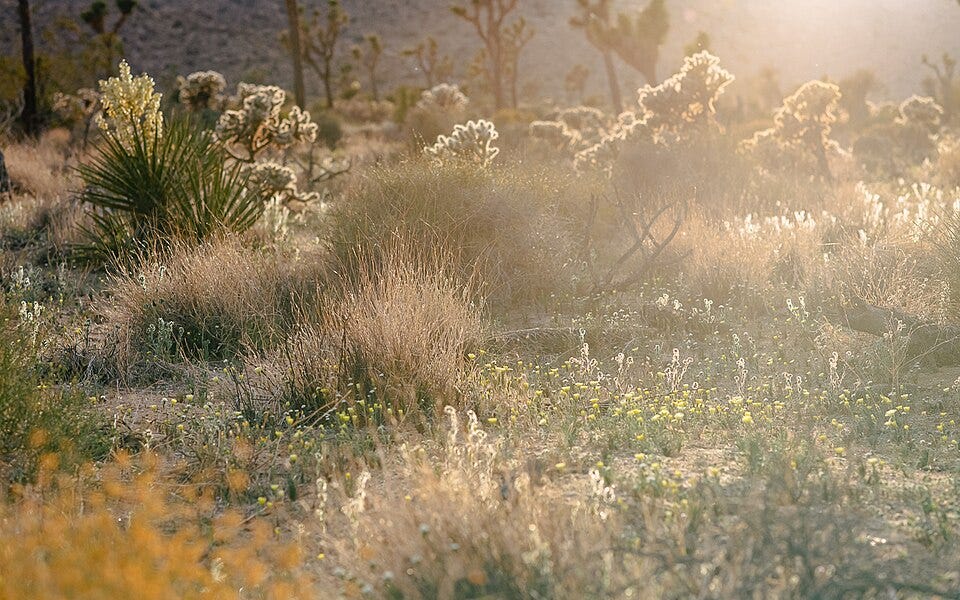
So, Caleb and Joshua come back and show the people their trailer – of an exceedingly good land, flowing with milk and honey. They tell the people to have no fear of that future. You can’t always judge the future by the past, they say. Trust the promise.
In response, the people threaten to stone them. The people can’t let in this message. They can’t watch this trailer. They can’t see this vision. They need to protect themselves against these dangerous ideas.
I get it. The future – this mysterious place where we’re all headed – feels so huge, so daunting sometimes. These days it can look bleak. We see the Nephilim. We feel small. We feel out of control. We feel like we’re going to get eaten alive. Climate change, war, mass shootings, bitter politics, the threats of AI. Online and off, we’re inundated with images from the trauma binoculars of the ten scouts.
The Prayer of Caleb and the Faith-Act of the Knicks
And yet, if we never risk believing the unbelievable – if we continue to stone the prophets who tell us that a land of milk and honey is just over the horizon – we’ll never get there. So, what’s the solution?
First, there’s the prayer of Caleb. To believe the unbelievable is a spiritual capacity and, like Caleb, we can cultivate it: Prostrate ourselves on the ground, our earth mother, the abode of our ancestors, to pray for freedom from learned cynicism. When we open ourselves to love, human and divine, we ground ourselves in something deeper. We receive a different spirit – a ruach acheret. We soften our certainty about how the world is, and we imagine how it could be.
There’s also the faith-act of the Knicks. The Knicks believed so fully in themselves and each other that even when history told them they could never win, they played with all their might as if they could. And it was only because of this that they won. We can follow their example when times get hard: Without an ounce of resignation, without an iota of hubris to think we know what’s possible and what’s not, act with full force to bring our ideals to life.
Friends, we have both trailers. Which movie will play depends on all of us. So, this is what we can pray for:
To be imbued with a ruach acheret.
To recognize the trauma binoculars.
To know that the past does not have to determine the future.
To not be held back by fear.
To risk transformation.
To be able to believe the unbelievable,
and because we believe it, to create a different reality.
This essay is based on a sermon I delivered at Romemu, NYC on June 12, 2026 on the Torah portion Shelach. Watch it here.
Just brilliant. Filled with hope, wisdom and spirit.